
1 - Positioning
As a main crop from May through September/October
• Avoid cold, clay-rich soils
• Choose plots with a south-facing exposure
2 - Soil Preparation
From November through March
- Conduct a soil test to determine the appropriate fertilizer application
- Always decompress files
- Apply organic fertilizer during the winter: 30–50 metric tons of manure
From March to April
- Plow the field
- Loosen the soil gently on the surface
- Perform 1 to 2 false sowings
3 - Sowing
May
Don't plant too early
Requirements: The soil temperature must be at least 12°C
- Sow in firmly packed soil to ensure good emergence
- Use a single-seed planter: it ensures consistent seeding along the row and at the correct depth
- Planting depth: 4 cm
- Seeding speed: 4 km/h maximum
to be done
- Application of a starter fertilizer
- Insecticide for long-term use in pastures
- Slug repellent
- Running a cultivator over the field after sowing
planting density

4 - Mineral Fertilization

5 - Weed Control
- At establishment, post-seeding / pre-emergence
- At the 3-leaf stage
- Make-up class
Need some support?
Please feel free to contact us for more information about our products
6 - Hoeing
- At the 3- to 4-leaf stage: helps control any regrowth of weeds
- At the 6/10-leaf stage: helps warm and aerate the soil, and stimulates sorghum growth
7 - Insecticide based on the presence of pests
- At the 6–8-leaf stage: treatment for cutworms
- At stage 6 / 10 leaves: treat for aphids, leafhoppers, leafrollers, and sesamia moths if the leaves are curled into a cone shape
8 - Trace Elements
Apply a foliar biostimulant enriched with Zn and Mg
9 - Irrigation
Before flowering, do not water after August 10
- No more than 25 mm per application
- Excesses are harmful
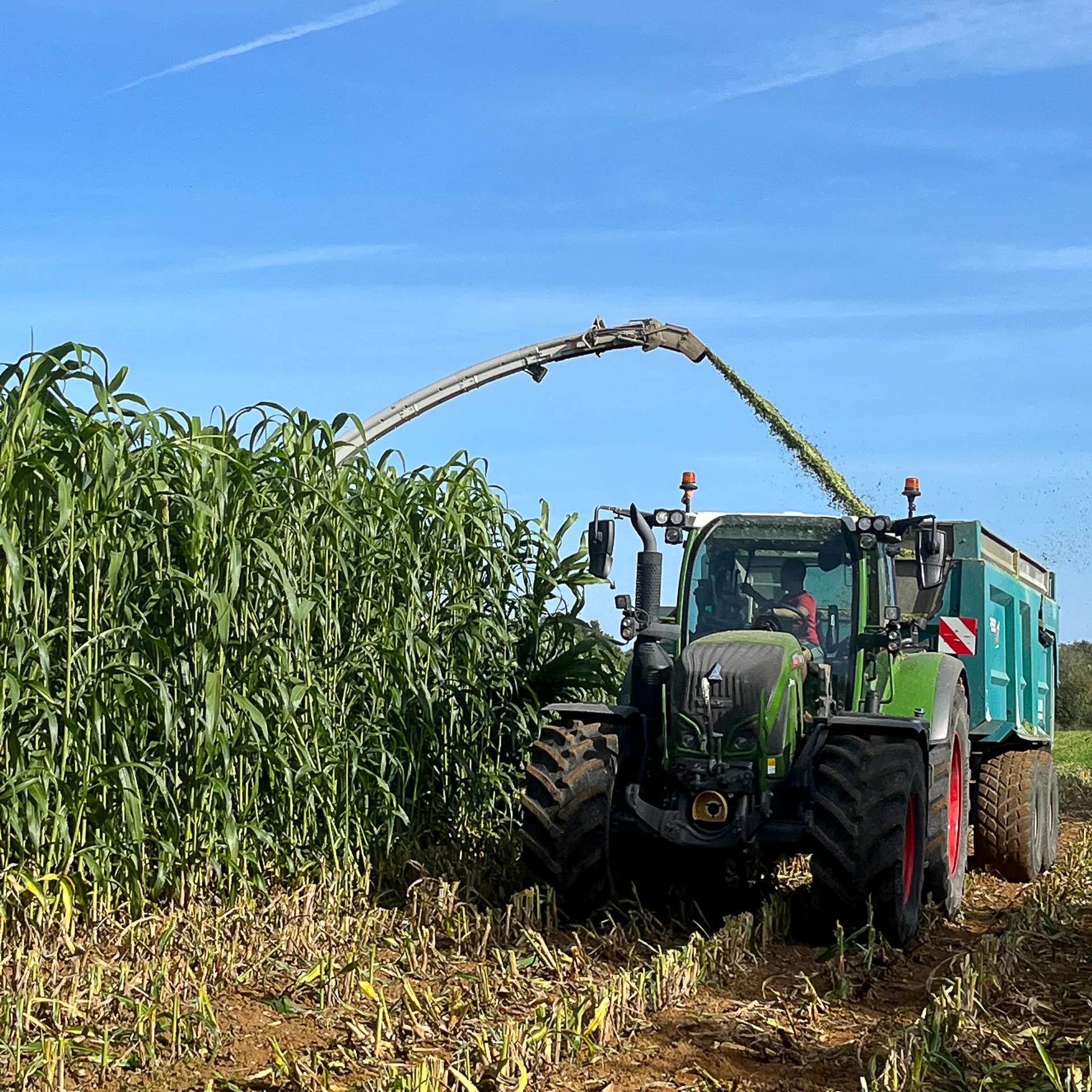
10 - Harvest
September 20 through October 10
- Harvest when dry matter content is 26–30%
- Remove the spark plug from the forage harvester
- Chop into 3–5 cm pieces
- Do not pack the silo too tightly
- It's best to harvest in the afternoon, 72 hours after the last rain